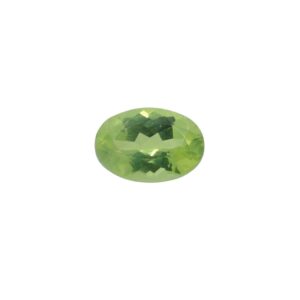


Chrysoberyls
Chrysoberyl is an oxide of aluminum and beryllium, BeAl204, which crystallizes in the orthorhombic system. It derives its name from the Greek words “chryso” and “berullos,” which respectively mean “gold” and “beryl”. Chrysoberyl is characterized by its green-yellow color, which can range from golden yellow to olive green. Its green hue is often associated with that of emerald, although the two stones differ in their chemical composition and hardness. It has a hardness of 8.5 on the Mohs scale, making it one of the hardest gemstones. This makes it resistant to scratches and gives it excellent durability, making it suitable for use in jewelry.
Originating from different parts of the world, chrysoberyl can be found in Brazil, Russia, Sri Lanka, India, and some countries in Africa.
The most sought-after varieties of chrysoberyl are cat’s eye chrysoberyl and alexandrite.
Cat’s eye chrysoberyl is known for its unique optical phenomenon called chatoyancy. This phenomenon is characterized by a bright band of light that moves across the surface of the stone when cut in cabochon. It is caused by the internal reflection of light on numerous long and parallel inclusions.
Alexandrite is famous for its ability to change color from emerald green in daylight to raspberry red under artificial light. This dramatic color change is due to the presence of chromium in its crystal structure. Alexandrite is renowned as one of the rarest and most coveted gemstones. It is named after the Russian emperor Alexander II and is primarily found in the Ural Mountains, in Russia. However, other deposits have also been discovered in countries such as Brazil, Sri Lanka, Tanzania, and Zimbabwe.
According to an ancient Egyptian legend, chrysoberyl was considered a sacred stone that protected against malevolent forces and brought prosperity. It was said to be a manifestation of the goddess Bastet, the Egyptian goddess of joy, fertility, and protection. In this legend, it was mentioned that Bastet created chrysoberyl to guide and protect the souls of the deceased during their journey to the afterlife. The stone was believed to contain the divine power of the goddess and served as a talisman, to assist travelers in safely navigating through spiritual realms. It was also said that chrysoberyl had the ability to detect the presence of malicious witches and sorcerers. The stone would change color or emit a radiant glow in their presence, thereby warning the bearers of imminent danger. Chrysoberyl holds significance in various esoteric traditions.
The alexandrite derives its name from Prince Alexander II of Russia, who ruled in the 19th century. The discovery of this precious stone was made in 1830, on the prince’s birthday. When the stone was presented to the prince, he was struck by its ability to change color, shifting from emerald green to a glowing reddish hue under internal lighting. The phenomenon of alexandrite’s color change was considered symbolic for the prince, representing Russia’s national colors: green for the Russian countryside and red for the blood shed for the homeland. Thus, alexandrite was named in honor of Prince Alexander. This legend contributed to the popularity of alexandrite in Russia, where it is regarded as a highly valuable gemstone with historical significance. Alexandrite is often associated with royalty, wealth, and power. Regardless of the actual origin of the name alexandrite, it is undeniable that this gemstone is appreciated for its unique ability to reflect different colors.
These legends should not be regarded as historical facts. They exist to add a cultural and spiritual dimension to the meaning and appreciation of chrysoberyl in various societies throughout time.